
Insights Leadership Road Water Insurance
Resilience as an Innovation Space: Building the Market of the Future
Reflections from the World Infrastructure Forum in Madrid on resilience, shared infrastructure boundaries and the preparation needed before a crisis.
The question underneath
At the World Infrastructure Forum in Madrid, I joined a panel on resilience as an innovation space, alongside colleagues from engineering consultancy, academia, venture investment and parametric insurance. The brief was ambitious: what would make resilience something an owner can procure, a provider can deliver, an investor can price, and everyone can be held to?
We were tasked with looking beyond today’s compliance and risk-management approaches to the technologies, materials, digital solutions and business models that could make resilience a mature innovation ecosystem by 2035. This piece reflects on some points where the conversation kept returning to. It draws on the panel as a whole, not on any one voice. My view is that we ask too much of individual assets at a given point in time, and too little of the spaces between them: asset owners will need to think strategically not just on their own portfolio but how they interface with others.
Innovation works inside a boundary
Technology matters (that’s part of why we set up BKwai). New materials, sensing, analytics and better models all make parts of a system stronger or better understood. But each one improves something within a defined scope.
The example of Hurricane Katrina was raised, and brought forward a different example of systems thinking. The official post-Katrina performance review found that only 16% of the combined pumping capacity in the parishes it studied kept operating, and that many pumping stations were inaccessible, inoperable or without electrical power which was cut off by the flooding. The pumps were the visible asset, and whether they worked depended on power, access and the flood defences around them.
Who owns the edge?
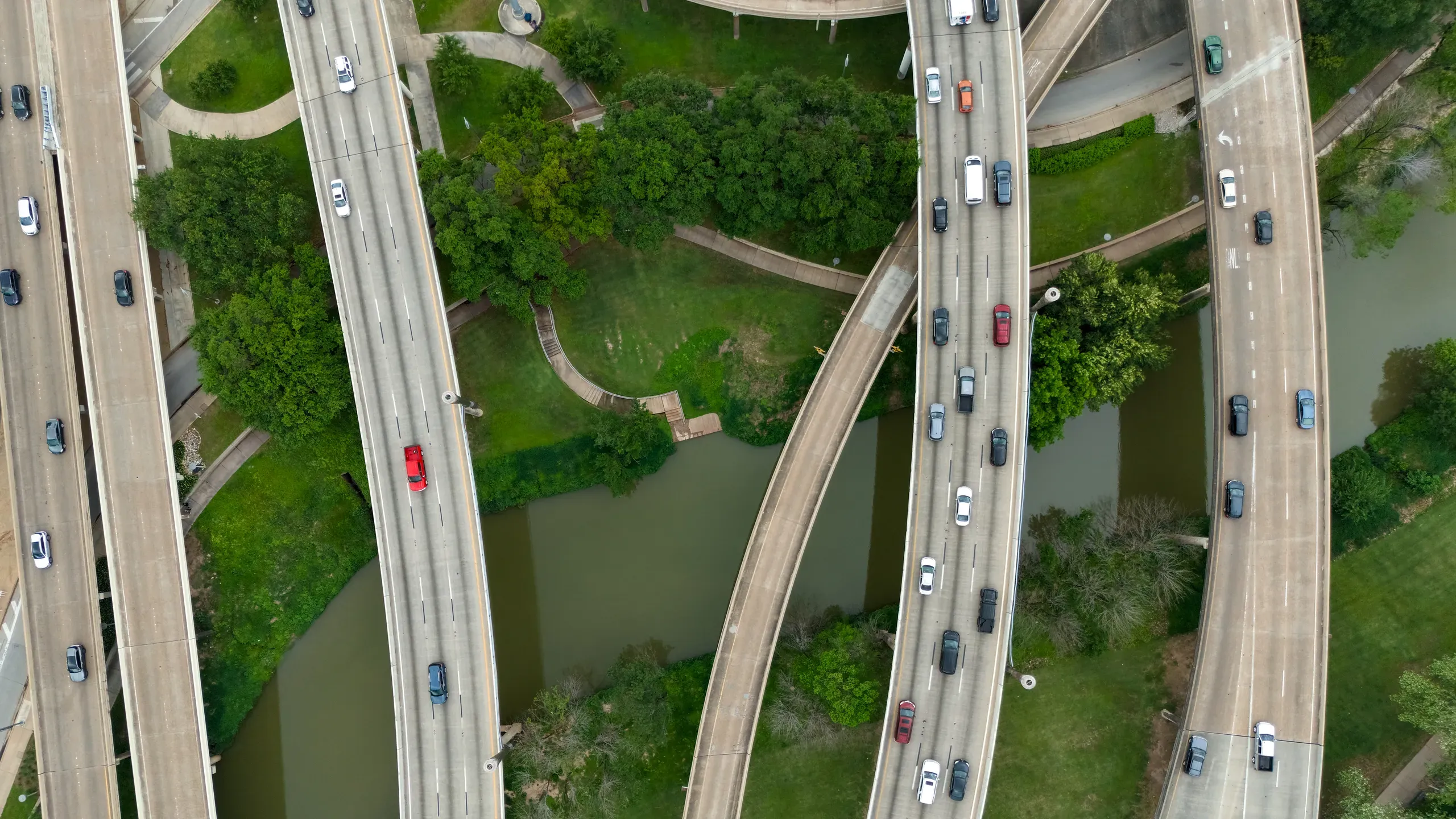
Consider a road network facing flooding risks. The owner sees roads, bridges and drainage systems. But the network’s ability to cope also depends on decisions made elsewhere: drainage upstream, where development is allowed, how neighbouring networks are operated, who decides when to close what.
Those factors are usually out of scope for the people responsible for the road network, assuming that the system outside of their asset network works ideally. So these risks may not be modelled, funded or answered for. Everyone can see their own system, and the boundary belongs to no one. Resilience practitioners tend to counter this by having each group examine the boundary at its own edge: what it assumes about the systems beside it, and what they assume about it.
Resilience is decided before the event
Two threads from the panel pointed in this direction:
Capital. Parametric risk transfer pays out when an agreed trigger is met, not after a full loss assessment, so money can reach a response far faster than a conventional claims process allows. The hard work moves earlier, into agreeing what to measure, where, and at what level. Insurers’ ability to quantify risk is itself an innovation, and the same pricing can show where prevention pays.
Information. From my own background in urban search and rescue, I have seen that in recent major urban disasters, early response was often organised around lines drawn on a map from very little information. Much of what would help already exists: post-disaster remote sensing, building typologies and more. It is rarely assembled and ready before the event, and now that so much data is available, we should get organised to use it.
In both cases, the preparation is the product. And both only work if organisations agree across their boundaries before anything goes wrong, including how to share information for the greater good. Security and commercial sensitivities are also important and need working through. But we now hold more information than ever, and we are not making it accessible for better preparedness and response. Many different parties would benefit if we did, not just the ones generating it.
Questions for infrastructure leaders
Five questions worth asking in your own organisation:
- Who owns the interfaces between our assets and the systems around them?
- What sits outside the scope of our risk assessments that would decide how we perform in a real event?
- If a major event happened tomorrow, what would we need to know to act within days, and is it already assembled?
- When a loss is avoided, who captures the value, and would they pay for it?
- What decision does a given resilience investment actually change?
Where this leaves us
A mature market for resilience will emerge when we can define, measure and be accountable for outcomes that cross boundaries. That is a harder problem than any single technology, and a more interesting one.
Thank you to the organisers of the World Infrastructure Forum and to my fellow panelists from Arup, CEMEX Ventures, Parametric Factory and MIT for a discussion that left me with more ideas and questions to think over than I arrived with.
Resilience is also imperative at the boundaries, and before the event. We’re working on solutions that play in this space, but do not have all of the answers. I would welcome conversations with asset owners and operators interested in collaborating in developing this further.
More insights
-
 Insight ·
Geospatial Analytics
Asset and construction monitoring has evolved at an arguably slow pace over the past few centuries.
7 min read - Leadership ·
Asset Management Support
Infrastructure Asset maintenance is a key part of the bigger asset management discipline.
4 min read -
 Insight ·
Climate Change
As the last few months of weather have adequately demonstrated, our weather is changing and is becoming ever more extreme.
4 min read
See what BKWAI can see on your assets.
Let's discuss how predictive monitoring can reduce your whole-life asset costs.